
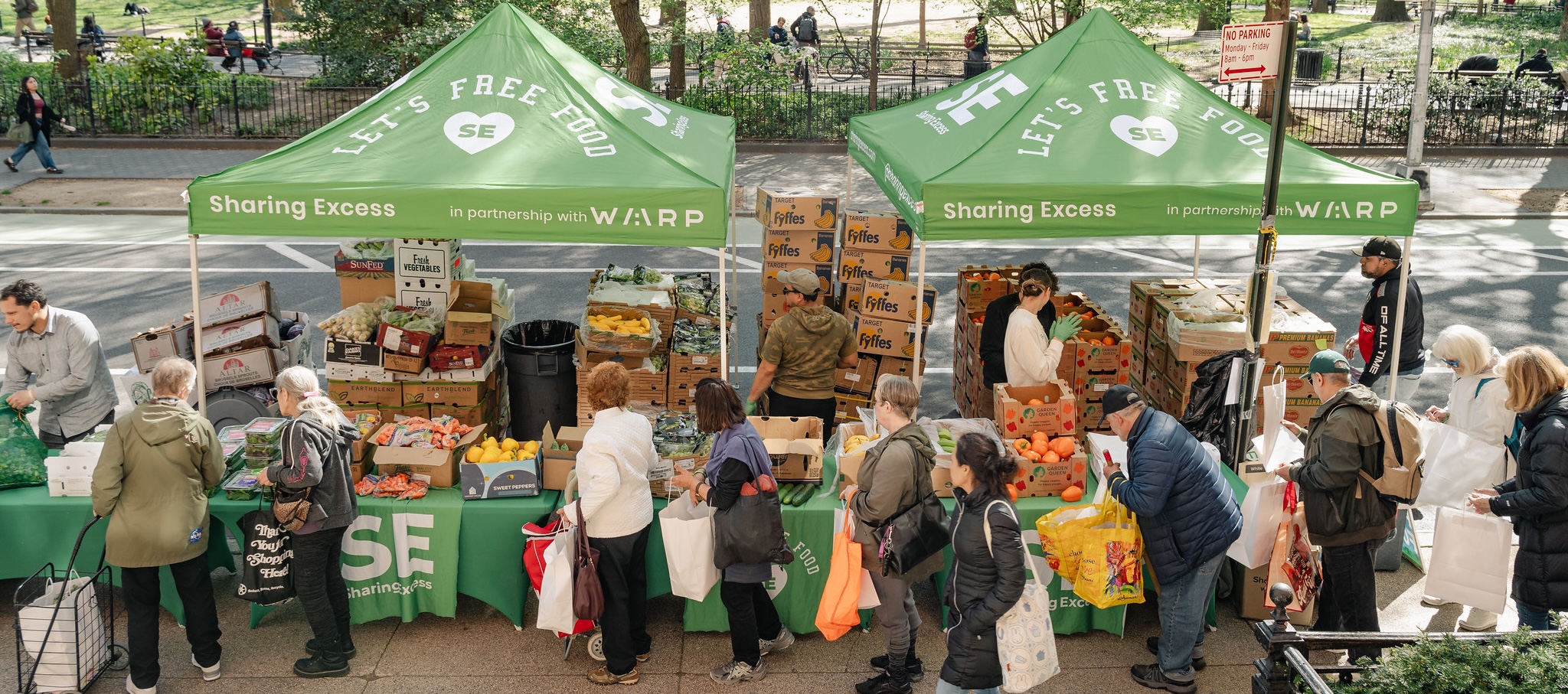
For many Americans, examples of food scarcity are not hard to find. According to the USDA, approximately 1 in 7 Americans face food insecurity, which means that if you’re not directly affected, chances are that someone you know is. It may seem paradoxical, but even though millions of people in the US frequently face a lack of access to food, the problem isn’t a food scarcity issue. In fact, while nearly 48 million individuals struggle to keep their families fed, 120 million lbs of perfectly edible food go to waste each year.
So why does this happen? If we have such a large surplus of perfectly good food, why don’t we just give it to the people who need it? On the surface, this seems like a legitimate and simple solution to hunger in America. In practice, this is an incredibly complex logistical problem that Sharing Excess is working to solve every day. Below, we’ll break down how this disparity occurs and how Sharing Excess is actively working to close the meal gap.
Food Waste is Largely a Systemic Issue
When people think of food waste, they often think of spoiled milk in the fridge or sprouting potatoes in their pantry. While household food waste certainly exists, the vast majority of national food waste actually occurs well before it ever makes its way into someone’s kitchen. Instead, the real issue is much more systemic, starting as early as when that milk is first recovered from the cow or when those potatoes are pulled from the ground. At the end of the day, many Americans are left without adequate sustenance, not because there’s a shortcoming in the food supply, but because there are many challenges when it comes to moving food products from one place to another within the required schedule.
Food Waste in Agriculture
Growing food is a carefully balanced operation that requires enormous amounts of land, time, labor, water, equipment, and agricultural knowledge. Combine this with the high-risk nature of agriculture, where fluctuating temperatures, too much or not enough rain, and disruptions in the labor market can cause devastating losses to yields and harvesting times, and it’s easy to see how plenty of edible food never even makes it into distribution.
There’s also the issue of contracts between farmers and buyers. The farmer’s job is to produce the food, but when harvest time comes around, there aren’t always enough distributors or retailers that are able to comfortably purchase all of the food that’s grown. If the consumer market shows a lack of interest in beets or a beet distributor has an unexpectedly successful growing season for beets, the beet farmer is likely going to be left with a surplus of product the market can’t absorb and could succumb to spoilage.
Situations like this happen more often than many people realize. Sometimes, produce is left in fields because harvesting and transportation costs exceed what buyers are willing to pay. Other times, food doesn’t meet size, shape, or appearance requirements despite being perfectly nutritious. The result is surplus food that was grown to be eaten but never reaches a plate.
Food Waste in Distribution
When a supply of food does leave the farm, it enters the next stage: distribution. This part of the food system is designed to be both reliable and highly efficient, moving product through tightly coordinated schedules so that stores, restaurants, schools, and institutions receive what they need when they need it.
However, even though many distributors have a sixth sense for efficiency, there are still many unforeseen issues that can come up that cannot always be planned for. Like farmers, distributors can often struggle to meet demands because the consumer market is always fluctuating. This can result in their clients in the retail or food service industry changing orders at the last minute or even canceling an order outright, leaving a surplus of food with nowhere to go. In other situations, the consumer market isn’t to blame, but rather coordination or equipment issues. If a truck in the distributor’s fleet suddenly experiences cooling issues, they have a very short window of time to fix it before their load goes bad.
Food Waste in Retail
While a grocery store’s success depends on how many units of food they sell in a given year, if you look in any dumpster behind even the smallest local grocery store, chances are, you’ll still find pounds of perfectly edible food waiting to be carted off to the landfill. One of the driving reasons why this happens has a lot to do with what the general public is comfortable eating. When a consumer sets out to do their weekly grocery shopping, they generally prefer the most recently manufactured and aesthetically pleasing products, even though many of the products on shelves may be slightly older (but still safe to eat) or have some minor cosmetic blemishes.
Unfortunately, this can leave retailers in a difficult situation. Even though most, if not all, of their supply is perfectly sellable, if customers are faced with the choice to buy milk that expires in one week versus two weeks, they’re more likely to buy the latter. As a result, retailers will often be left with a surplus that doesn’t always sell in time.
Food Waste in Food Service
The food service industry often deals with similar challenges to those in distribution. It can be very difficult for restaurateurs and meal service providers to predict which dishes will be more popular at a given time, and to coordinate their ordering accordingly.
For example, let’s say that it’s April in Philadelphia, and there’s still a chill in the air. A restaurant, which is well known for its beef stew, predicts that they’ll have at least a hundred customers that week who will order the dish. However, an unexpected heatwave strikes, and these same customers decide that they’d rather go to the gazpacho place down the street, leaving the restaurant with hundreds of pounds of beef, potatoes, and celery. They may try to incorporate these ingredients into other dishes, but unfortunately, they’re still left with plenty of leftovers with little interest in the alternative specials they have to offer.
The sad truth is, even when restaurants and other food service professionals plan to the best of their ability, there are plenty of unforeseen pitfalls that can come up that can create an unavoidable excess of food.
Food Waste at Home
In the larger conversation of how food gets wasted, there’s often a strong emphasis placed on the responsibility of consumers to reduce this said waste. In some ways, this is valid, primarily because a lot of consumers simply have more control over what they buy and predict what they themselves will eat. In general, there are many strategies that consumers can employ to minimize their waste to the best of their ability. If a person has a craving for chocolate-covered almonds but decides to cut out sugar from their diet after they’ve already purchased them, it’s fair to say that the best solution is to donate or gift the product if they are able to do so. If a person is grocery shopping for their family of five, they can often plan their meals accordingly so that leftovers are minimal.
However, at the end of the day, these consumers still face challenges in maintaining their impact on the national food waste that is not unlike those in the agricultural, distribution, retail, or food service industries. This is especially so with families with small children who can have unpredictable appetites or food preferences, or ordering food from restaurants that have unpredictable portions. Moreover, as we’ve learned, household food waste is really just one small part of the issue when looking at the larger systemic issues that contribute to food waste before products ever land in the hands of consumers.
How Sharing Excess is Working to Reduce Food Waste
While the causes of food waste may be complex, the solution doesn’t have to be. At Sharing Excess, we believe that perfectly viable sustenance shouldn’t go to waste simply because unpredictable challenges in the food system exist. Every day, our team works to bridge the gap between surplus and need by recovering food that would otherwise go to waste and redirecting it to community organizations that can distribute it to individuals and families who lack access. Rather than allowing excess produce, dairy products, packaged goods, and prepared foods to be discarded because of logistical barriers, we help develop infrastructure and create pathways that move food where it can have the greatest impact.
The central aspect of our strategy is our partnerships with farms, wholesalers, distributors, grocery stores, and other organizations throughout the food supply chain, and working with them to identify surplus food and coordinate its recovery. In many cases, these businesses want nothing more than to donate their excess inventory but lack the resources, transportation networks, or infrastructure to do so efficiently. In doing this, we’ve successfully redistributed food to over 10 million people, transforming what would have eventually been waste into a sustainable community resource.
How You Can Help
Whether you’re an individual, a business owner, or someone simply looking for a way to make a difference in your community, there are many ways to help Sharing Excess’ mission in reducing food waste and supporting food access.
As we’ve learned in the sections above, one of the most vital resources that our team can receive is food donations. If your farm, grocery store, distributor, restaurant, or food service operation regularly has surplus food, Sharing Excess can work with you to redistribute this surplus to communities that lack access while also reducing waste. Not only will you be making an insurmountable difference to those in need, but in donating, you may also become eligible for tax benefits to help offset the financial cost of waste.
Individuals who are not part of the larger food system can still find multiple ways to volunteer and help out in our mission. This could be something as simple as sorting and organizing incoming food donations or coordinating and transporting food pickup and delivery. If you have limited time to donate to these tasks, we also welcome financial contributions as well. Regardless of how you decide to help, even the smallest contribution can make a huge difference in the lives of your community. If your business regularly has surplus food, we encourage you to reach out to Sharing Excess to put these products to use in a meaningful way.