
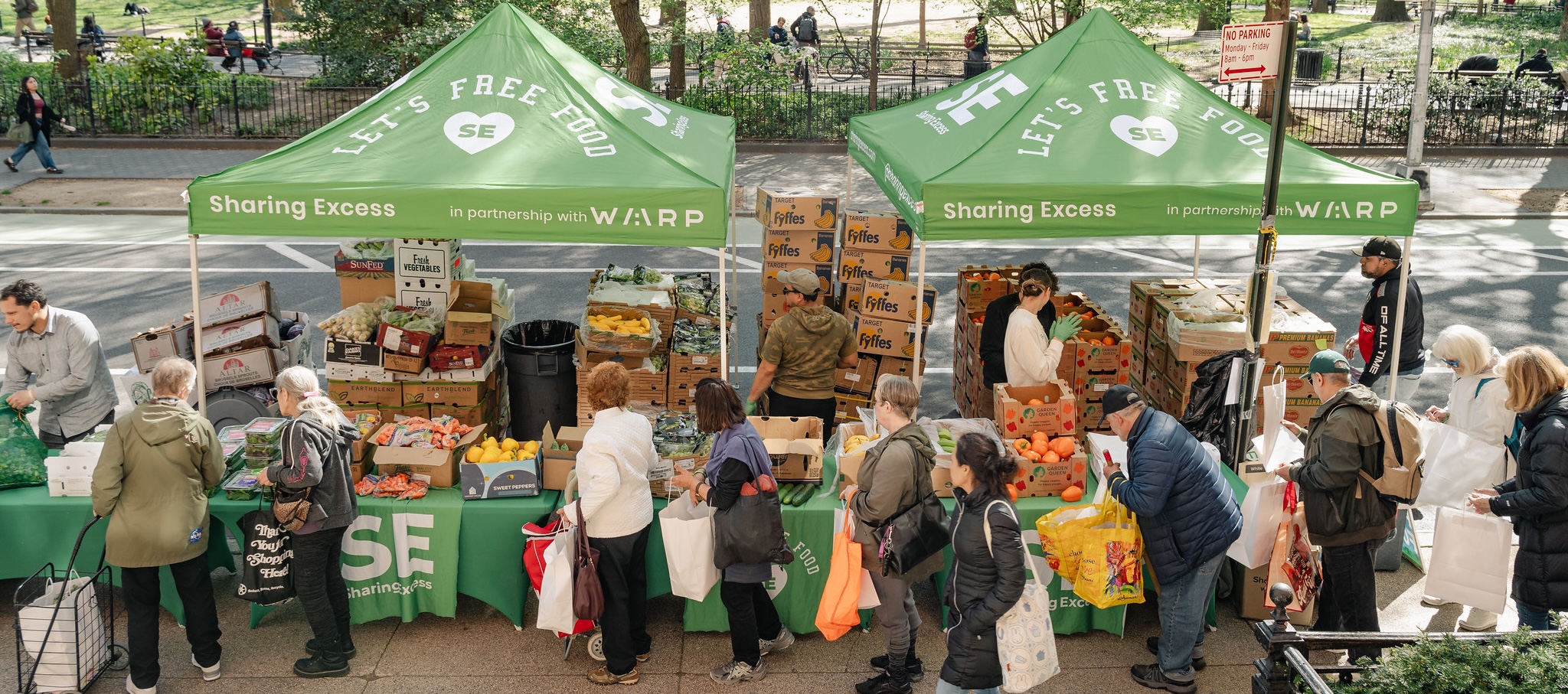
No matter which city or community you live in, it’s clear to most that the US has had a long history of food waste. In any given year, it’s estimated that approximately 30 to 40% of food that was otherwise perfectly viable to consume goes to the landfill. At the same time, as many as 48 million people regularly face food insecurity, lacking access to affordable and nutritious sustenance, even as millions of tons of perfectly edible food are discarded.
While there are always solutions that individual households can employ, such as meal planning and repurposing leftovers, the true root of the issue isn’t that you’re not eating every scrap left on your plate. In fact, the majority of food that goes to waste is thrown away before it even makes it to your grocery cart.
While there are thousands of individual organizations dedicated to getting food to those who need it most, not every organization is structured in a way that addresses the logistical intricacies that food rescue requires. Since our founding in 2016, Sharing Excess has set out to design new strategies that help connect businesses and organizations that frequently deal with a surplus of food with those in need.
What is Food Rescue?
Food rescue is the process of recovering edible surplus food and redirecting it to people facing food insecurity instead of sending it to landfills. This food can come from any number of sources, including:
- Grocery stores
- Farms
- Restaurants
- Bakeries
- Food distributors
- Corporate cafeterias
- Wholesalers
- Event venues
- Cold storage and distribution centers
In most cases, the quality of the food that is donated is of sound quality and health standards, but may simply be overstocked inventory, produce that does not meet cosmetic retail standards, prepared meals that were never served, or products nearing their sell-by dates. Instead of allowing that food to become waste, food rescue organizations, like Sharing Excess, move it quickly to nonprofits, shelters, food pantries, schools, community fridges, and mutual aid groups through our wholesale, retail, and direct-link rescue programs. Essentially, these efforts and the overall infrastructure of food rescue address two challenges at once: hunger and waste.
Food Banks Vs Food Rescue: What’s the Difference?
While food rescue has increased significantly in the last several years in terms of scale and frequency, it’s not a new concept by any means. In fact, some of the earliest examples of food rescue were, and still are, developed and put into action by food banks themselves.
That being said, while food banks and food rescue organizations are both essential to relieving hunger in their respective communities, food banks often operate much differently than organizations structured around food rescue. Traditional food banks typically function as centralized storage and distribution centers. They collect donated or purchased food, store it in warehouses, and distribute it to food pantries, shelters, and other community organizations. Much of the food handled through these systems is shelf-stable and designed for longer storage, but even in cases where fresh or prepared food is available, food banks do not always have the infrastructure or resources needed to deliver this food outside of their immediate area.
Food rescue, on the other hand, operates on a much shorter timeline. Instead of focusing primarily on storage, food rescue organizations recover surplus food directly from the source and redistribute it quickly before it spoils. For example, a grocery store may have excess yogurt approaching its sell-by date, a farm may have surplus vegetables after a harvest, or a restaurant may have prepared meals left over after a catered event. Food rescue organizations coordinate the transportation and redistribution of that food while it is still usable. This allows more fresh and perishable foods to reach communities in need at a much faster rate.
It’s also important to note that food rescue is not a replacement for food banks. In fact, many food rescue organizations work closely with food banks and pantries by supplying rescued food directly to them, in addition to other food redistribution organizations.
The Independent Nature of Food Banks
America’s hunger relief system is massive. There are approximately 60,000 food pantries operating throughout the country, each with its own goals, strategies, and networks. Collectively, they form one of the largest charitable food systems in the world, comparable to the country’s largest grocery and retail chains.
Sadly, however, this is part of the reason why gaps in food access still exist. Many food pantries are independently operated organizations with limited staff, transportation, and technological infrastructure. Some operate only a few days each month and rely heavily on volunteers. To further compound the issue, communication and resources between each organization can vary dramatically depending on location and funding. This creates an insular system where organizations may struggle to coordinate efficiently with one another or respond quickly to surplus food opportunities.
A grocery store may have thousands of pounds of excess produce available, but no easy way to locate nearby organizations that can pick it up immediately. One pantry may receive more bread or dairy products than it can distribute before expiration, while another pantry nearby experiences shortages. Food rescue organizations help bridge these gaps by creating more connected systems that move food faster and more efficiently, while also modernizing food distribution networks that were never originally designed to handle large-scale perishable recovery.
Since 2018, Sharing Excess has helped feed over 10 million people, in large part because we’re able to more efficiently facilitate food redistribution through a much wider network of donors, through tools such as our Surplus app.
Diversity in Food Distribution
One of the biggest advantages that food rescue organizations bring to the table is the diversity of food products that we are able to redistribute. Traditional hunger relief systems have historically relied heavily on shelf-stable items because they are easier to store and transport. While those foods remain important, they do not always provide the same nutritional value as fresh produce, dairy products, proteins, and prepared meals.
Food rescue, on the other hand, is designed to move fresh food (in addition to non-perishables) quickly instead of holding it for longer periods inside a warehouse. As a result, highly perishable foods such as fresh fruits and vegetables, salads, dairy products, sandwiches, prepared meals, and baked goods have a much better chance of getting eaten by those who need it most.
FAQs
Is food rescue safe?
Yes. Sharing Excess follows strict food safety standards for handling, transporting, and storing donated food. Federal protections like the Bill Emerson Good Samaritan Food Donation Act also protect businesses that donate food in good faith.
Where does the food come from?
Rescued food comes from grocery stores, farms, restaurants, wholesalers, bakeries, cafeterias, and distributors. In most cases, we receive donations from these establishments simply because their products can’t be sold fast enough before the distribution window closes.
Who receives it?
Rescued food is redistributed to food pantries, shelters, schools, soup kitchens, senior centers, community fridges, and mutual aid organizations, as well as directly to families and individuals experiencing food insecurity.
Is it free?
Yes. Sharing Excess provides free food to all recipients.
What about the food that’s not good enough to share?
Food that is spoiled or unsafe for consumption is not redistributed. Instead, we divert those scraps to composting programs, helping reduce landfill waste while creating nutrient-rich soil products.
A Better Food System is Possible
Addressing hunger requires a diversity of strategies, and while food banks provide a much-needed resource to millions of people across the country, the types of food that often fail to get distributed by them, such as prepared foods and fresh produce, don’t always reflect the needs of the communities in which they serve. More importantly, the structure under which food banks operate is often hyper-focused on addressing scarcity rather than accessibility, which, as we’ve learned, is the real heart of the issue behind hunger.
If your business organization frequently deals with surplus food products and meals that are unable to be sold or distributed before it’s too late, we encourage you to reach out to Sharing Excess to put these products to use in a meaningful way. The same goes for individuals and families who are looking to give back to their communities; Sharing Excess is always looking for volunteers to help transport, sort, and redistribute food and help keep their neighbors fed, and offers endless opportunities to do so. Together, we can help close the gap between food waste and access, and prove that waste is not inevitable and hunger is far from unsolvable.